



Reliable Medical

Complete Healthcare

Serving Hospitals

Professional Assistance
Gearing up something amazing for you…
Still waiting? Magic takes a moment! ✨
Spectrum Medical provides trusted healthcare solutions, quality medical products, and reliable services for better patient care.



| Product Details | ||||||||||||
|---|---|---|---|---|---|---|---|---|---|---|---|---|
|
Alternative For This Product
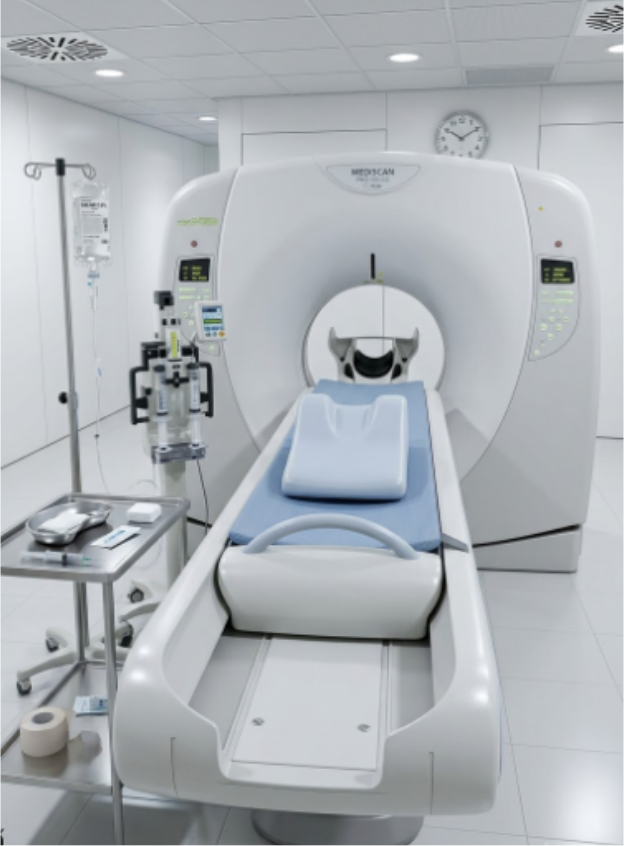
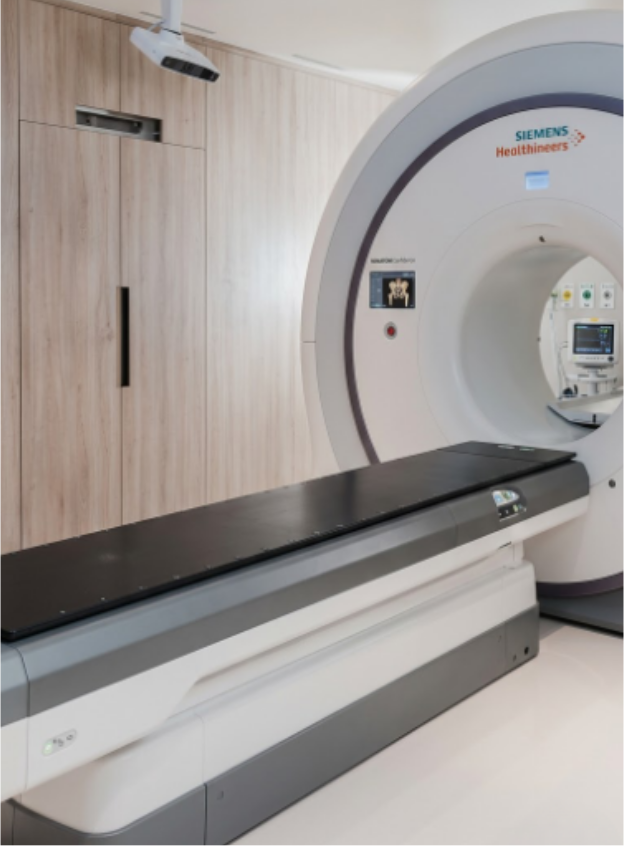
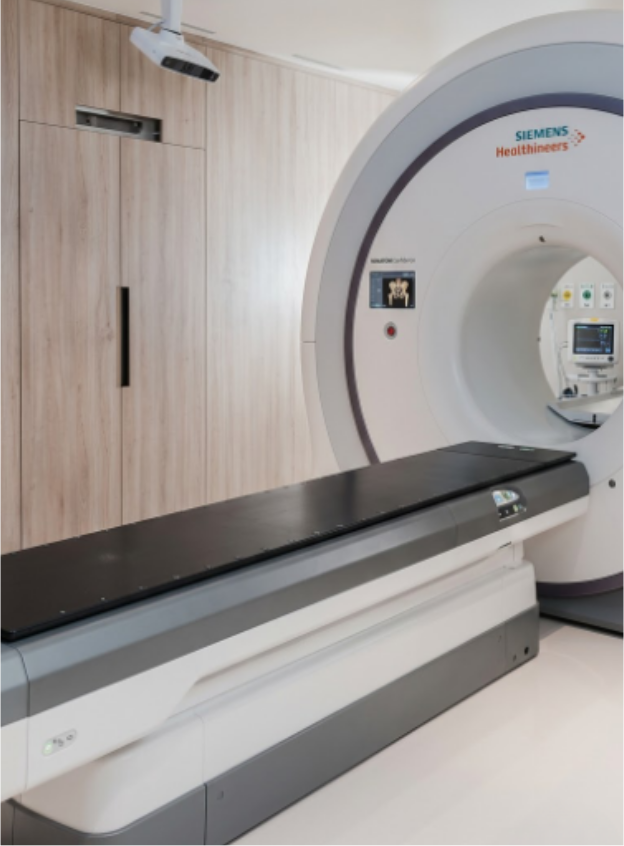
Magnetic Resonance Imaging (MRI) machines are sophisticated diagnostic medical imaging systems that use powerful magnets, radiofrequency fields, and computer systems to generate detailed, high-resolution images of internal bodily structures. Unlike X-rays or CT scans, MRI does not utilize ionizing radiation. Instead, a strong static magnetic field aligns the nuclear magnetization of hydrogen atoms in the body. Radiofrequency pulses are then applied to systematically disrupt this alignment, causing the protons to emit electromagnetic signals as they return to equilibrium. Receiver coils capture these signals, which are converted by complex mathematical algorithms—such as Fourier transforms—into precise, three-dimensional spatial maps of soft tissues, muscles, ligaments, and the central nervous system.
Modern MRI scanners are vital across neurology, orthopedics, cardiology, and oncology for detecting anomalies like tumors, strokes, and musculoskeletal injuries. High-field systems typically operate at 1.5 Tesla (T) or 3.0T, providing superior signal-to-noise ratios and accelerated imaging speeds. Advanced techniques such as functional MRI (fMRI) and diffusion tensor imaging (DTI) further expand clinical capabilities, allowing clinicians to visualize real-time brain activity and microstructural nerve tracts with exceptional clinical accuracy.
| Product Details | ||||||||||||
|---|---|---|---|---|---|---|---|---|---|---|---|---|
|